
The Shrewsbury Flaxmill Maltings were originally built as Dittherington Flax Mill and its Main Mill is widely acknowledged as the “world’s first multi-storey iron-framed building” – and sometimes referenced as the “grandparent of skyscrapers”.
Built between 1796–1800 and opened in around 1797 as a mill to spin flax fibre into linen, the red brick structure concealed a pioneering iron frame construction technique – the forerunner of modern skyscrapers.
Designed by Charles Bage, an architect and innovator, who conceived that an iron-frame offered a fire-resistant solution to a major issue of the Industrial Revolution – namely textile mills constructed of wooden beams and floors, supporting heated machinery lit by oil lamps and surrounded by flammable flax, kept burning down.
Bage’s radical solution was the design of an internal cast iron frame with brick arches spanning between the iron beams. In addition to fire resistance this construction proved to be strong and capable of supporting multiple heavy floors of machinery.
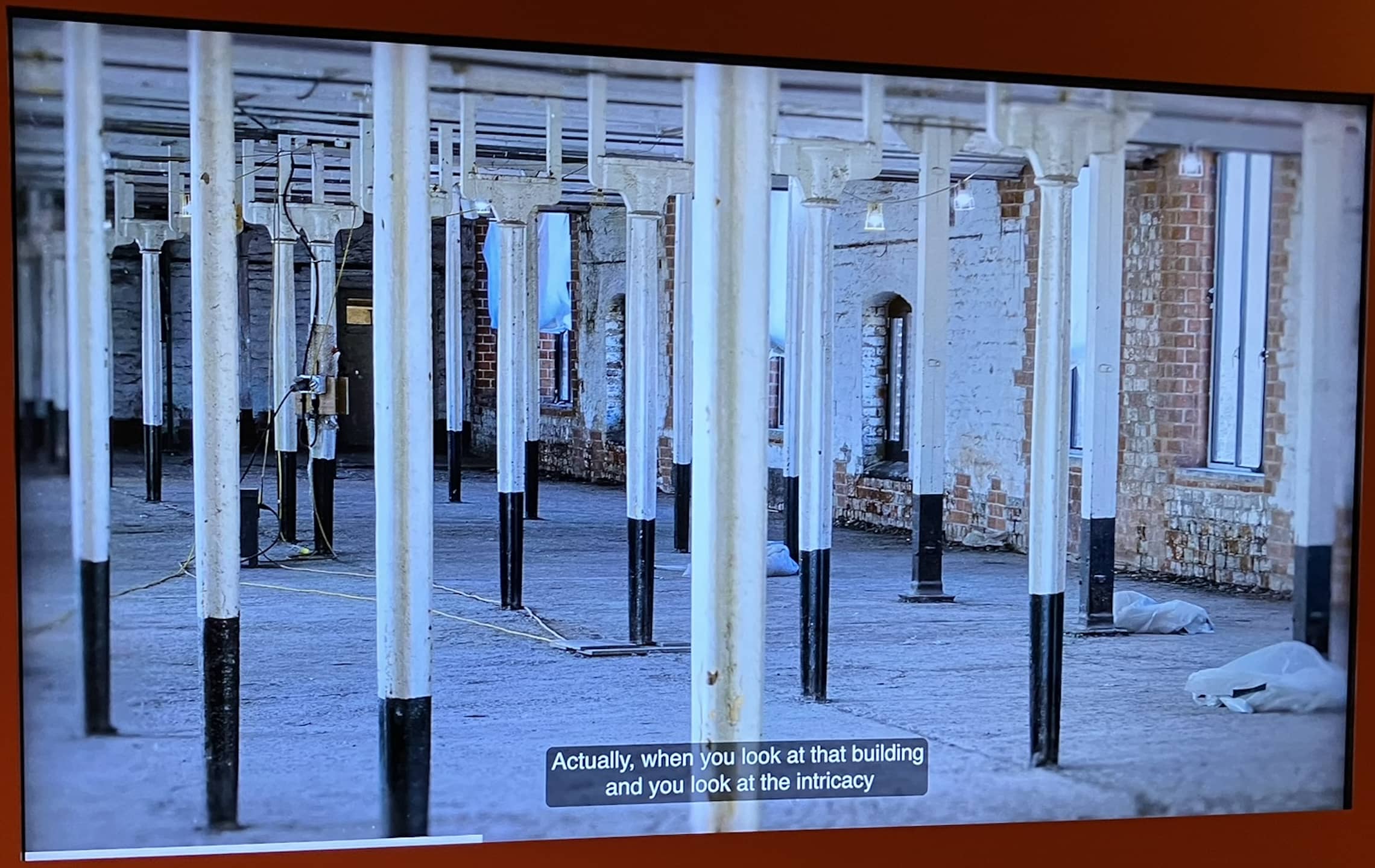
The image above is a photograph of a video display at the restored Shrewsbury Flaxmill Maltings illustrating the iron frame construction.
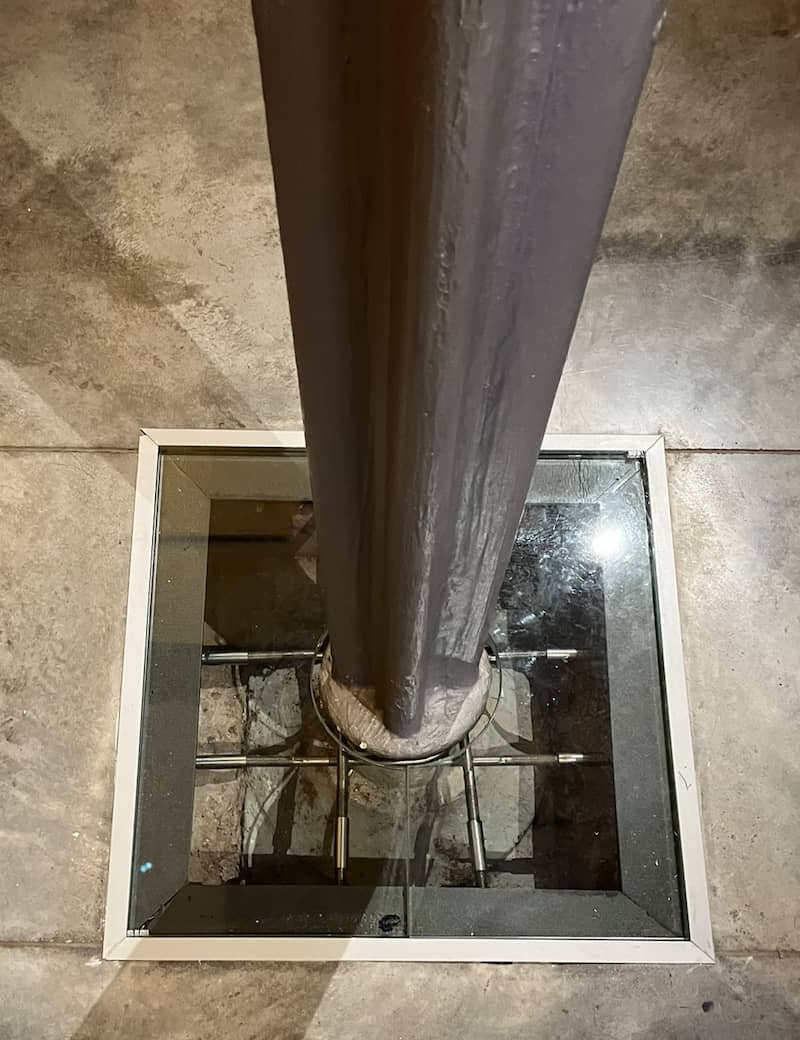
The image above shows the base of one of the many cast iron supports at Shrewsbury Flaxmill Maltings.
Bage also believed that industrial structures could be architecturally pleasing. He demonstrated this with the symmetrical facade of the Flax Mill featuring large windows that flooded the interior with light.
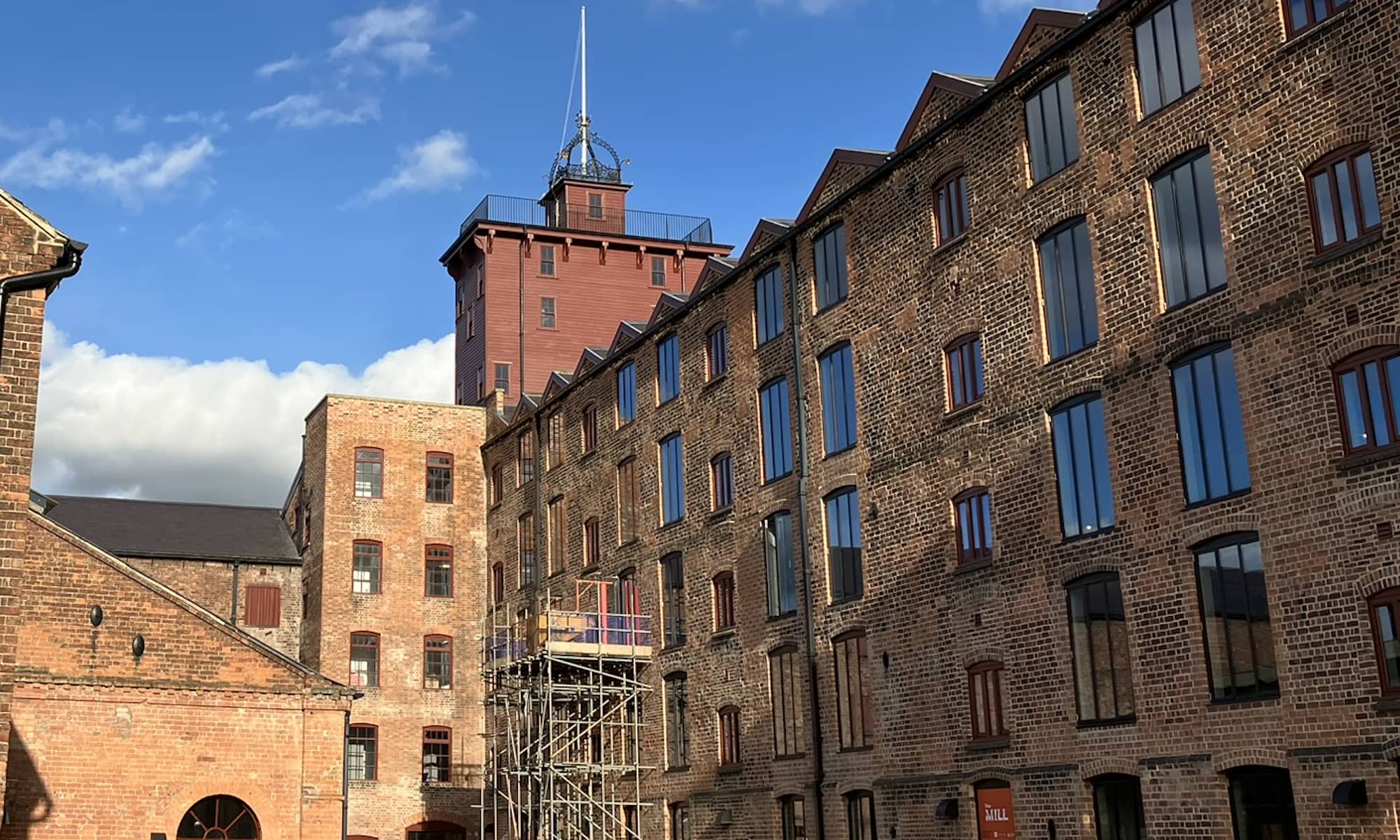
The image above shows the rear of the now restored mill and the large original window openings.
Declining profits meant that by 1886 the mill closed. In 1897 the mill was converted into a maltings and this required some adaptations – the large windows were blocked up (the malting process requires low light), and grain elevator towers and kilns were added. During WW2 the mill served as a temporary army barracks before malting resumed post-war. Sadly the malting business eventually succumbed to more modern cost-effective methods and malting ceased in 1987.
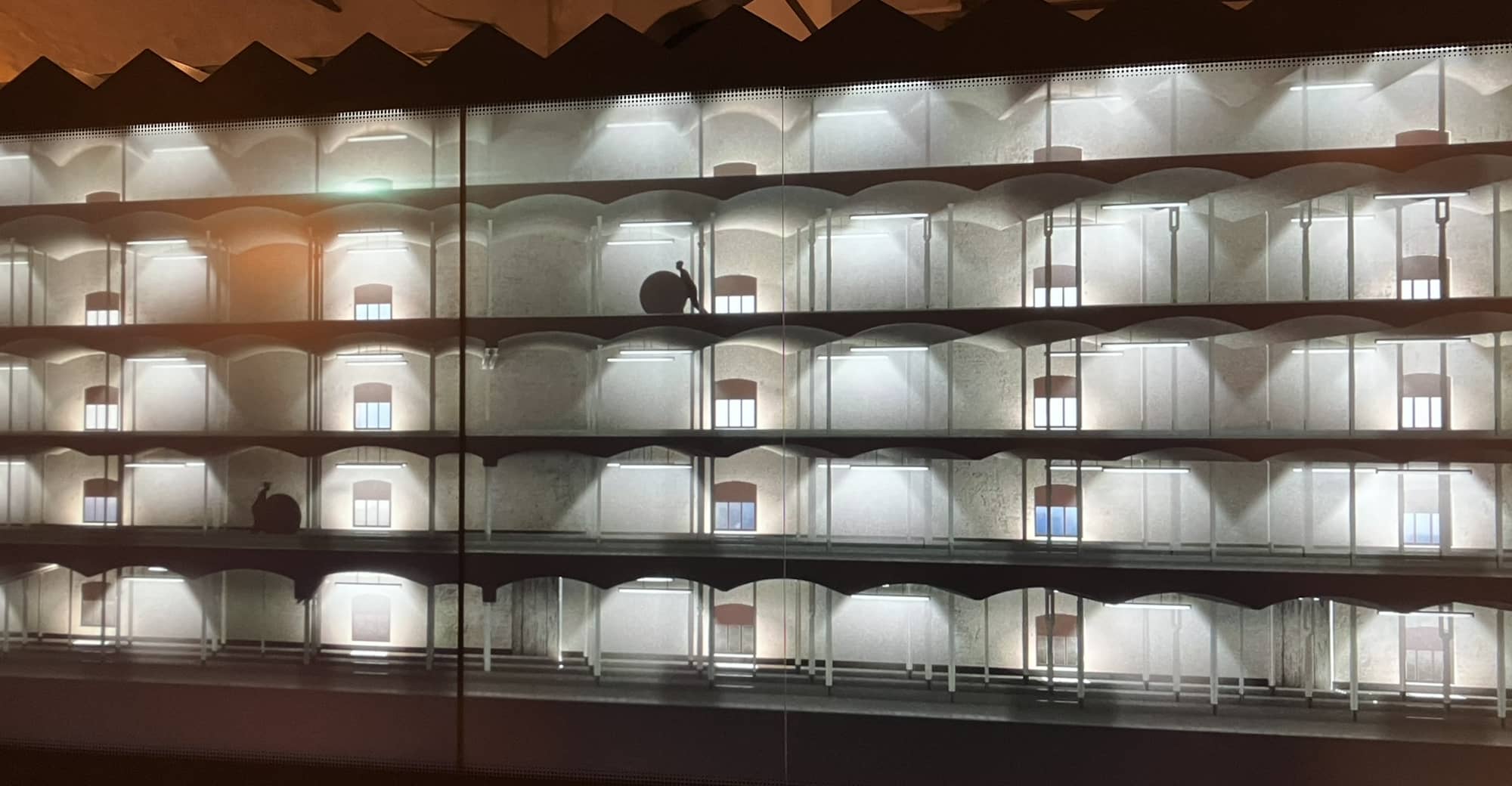
The image above of an interactive display shows the mill in use as a maltings and illustrates the iron frame structure.
Despite the historical and architectural importance of the building it was allowed to fall into disrepair – the roof collapsed and vegetation took over as the mill remained on Historic England’s “At Risk” register as one of the most endangered Victorian buildings in the country. It was designated Grade I listed in recognition of its architectural significance and English Heritage acquired the freehold in 2005.
A £31 million restoration project, supported by the National Lottery Heritage Fund, Historic England, and Shropshire Council funded a major restoration and redevelopment programme withe reopening of the Main Mill and Kiln with modern workspaces and visitor facilities which have preserved the building’s historic iron frame while making it accessible to the public for the first time in its 200 year history.
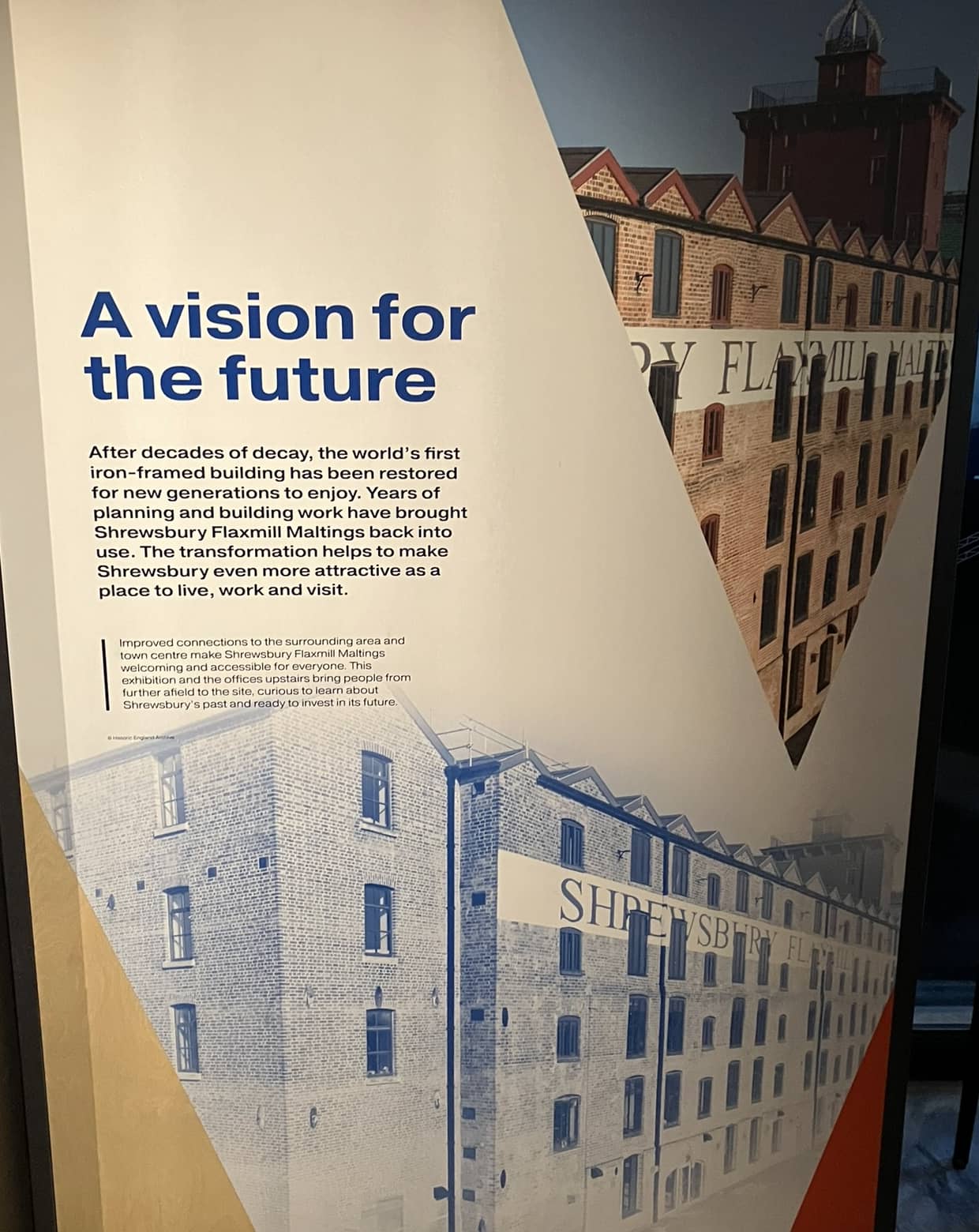
The image above is a photograph of an information panel at the restored Shrewsbury Flaxmill Maltings.
The restored Shrewsbury Flaxmill Maltings reopened in 2022 as a heritage destination. Visitors can now explore the building that started an architectural revolution, seeing the original iron columns and beams that changed construction forever. The site includes exhibition spaces, a cafe (currently closed), and offices, ensuring the building has a sustainable future while honoring its past.
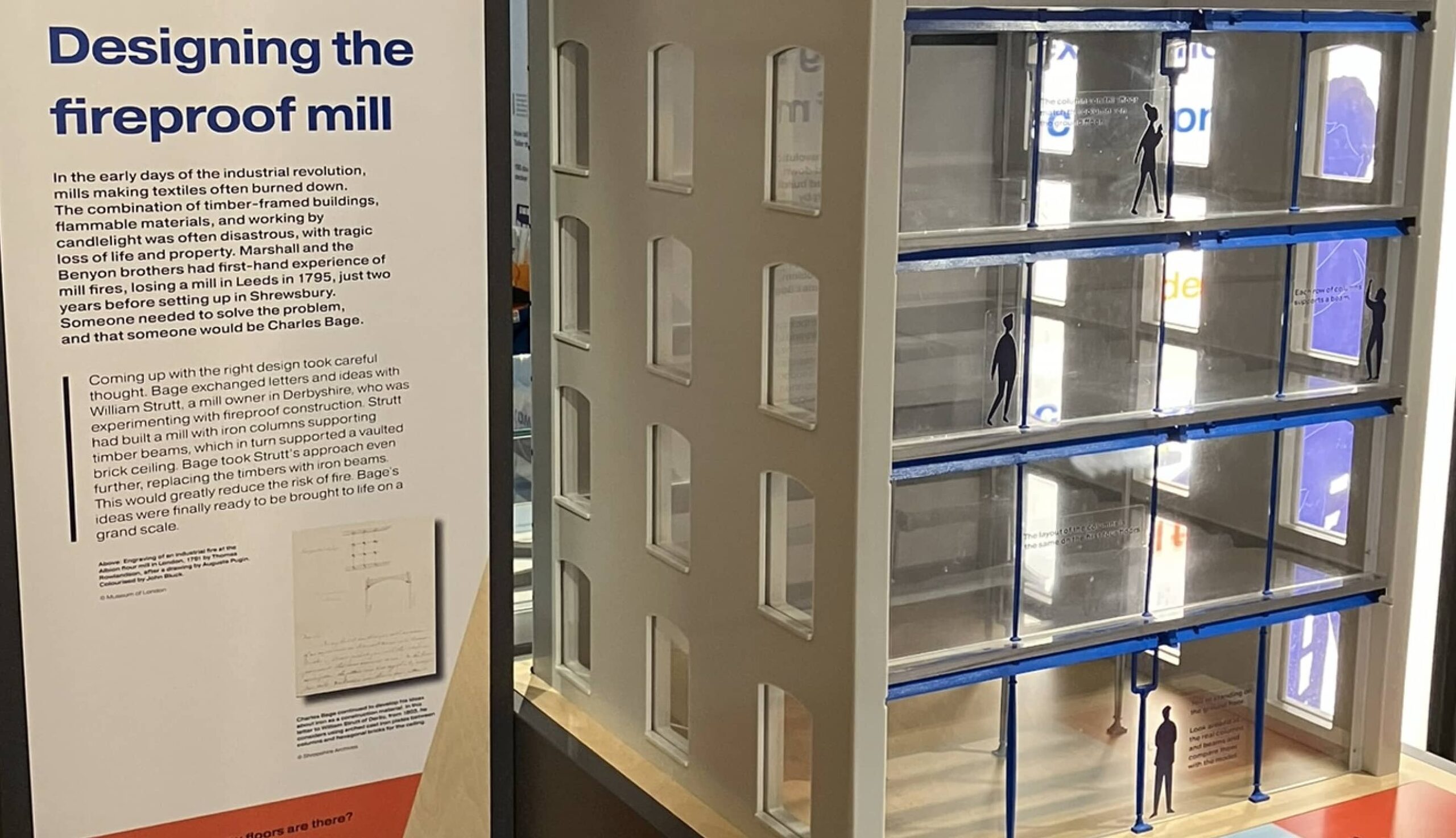
The image above is a photograph of a display at Shrewsbury Flaxmill Maltings illustrating Bage’s fireproof design of the original flax mill.
Restoration has been carefully handled to reveal the building’s history in layers, showing both its original 1797 construction and the later additions made when it became a maltings. A range of interactive displays describe why this building matters and how its innovative design spread around the world.
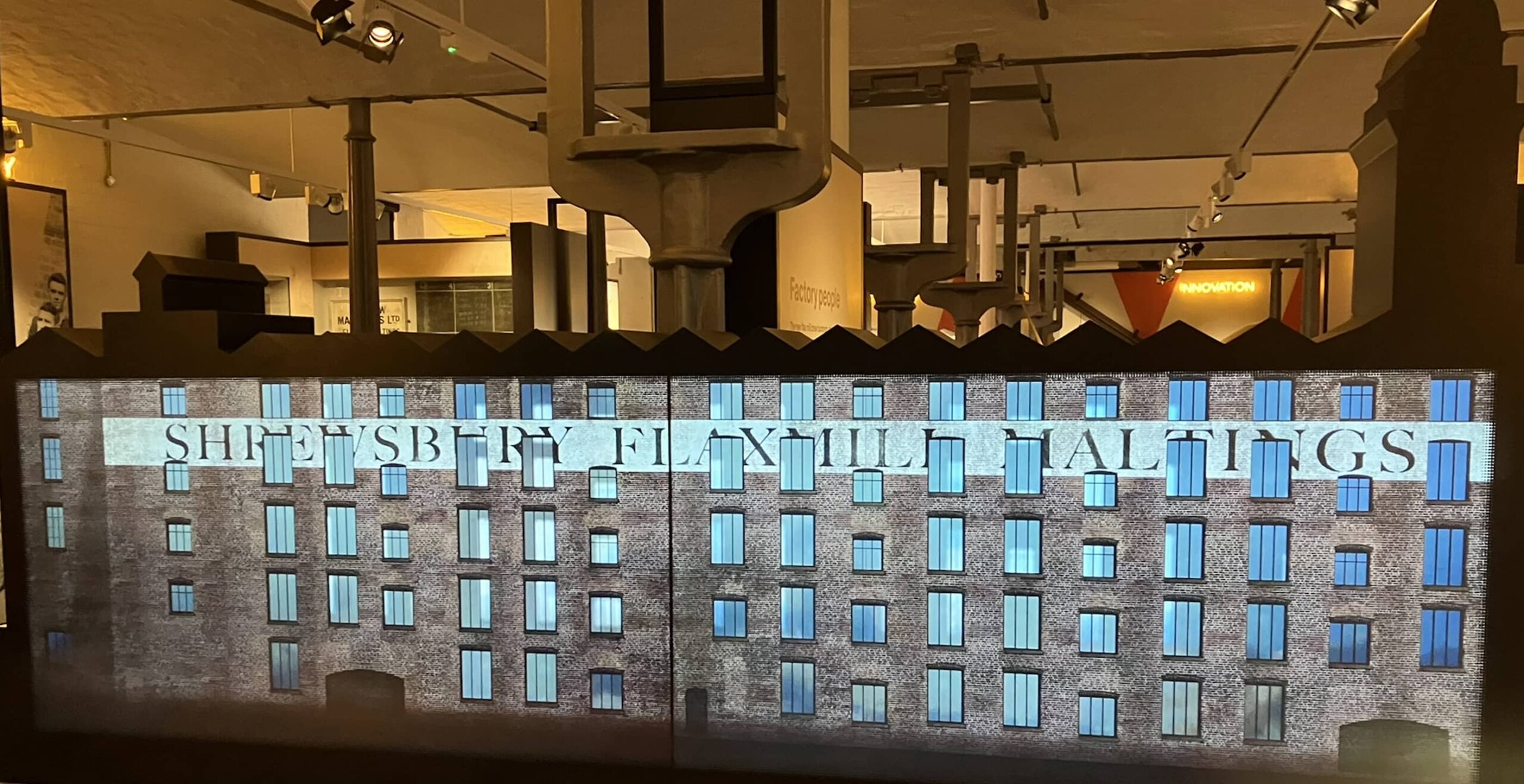
The image above is a photograph of an interactive display at Shrewsbury Flaxmill Maltings showing the symmetrical facade of the Flax Mill featuring large windows that flooded the interior with light.
Whilst Flaxmill Maltings may not be as famous as another Shropshire attraction from the Industrial Revolution – the Ironbridge at Ironbridge Gorge, a UNESCO World Heritage Site – its influence on modern construction is arguably even more profound. This unassuming red-brick structure quietly revolutionised how we build tall buildings, making today’s skyscrapers possible.
The photograph in the header of this blog post shows the front elevation of the restored Shrewsbury Flaxmill Maltings and you can see the original large window apertures along with a tower and kiln that were added later when the building was used as a maltings.


